
Roman Space Telescope Successfully Launches, Beginning a New Era in Surveys of the Universe
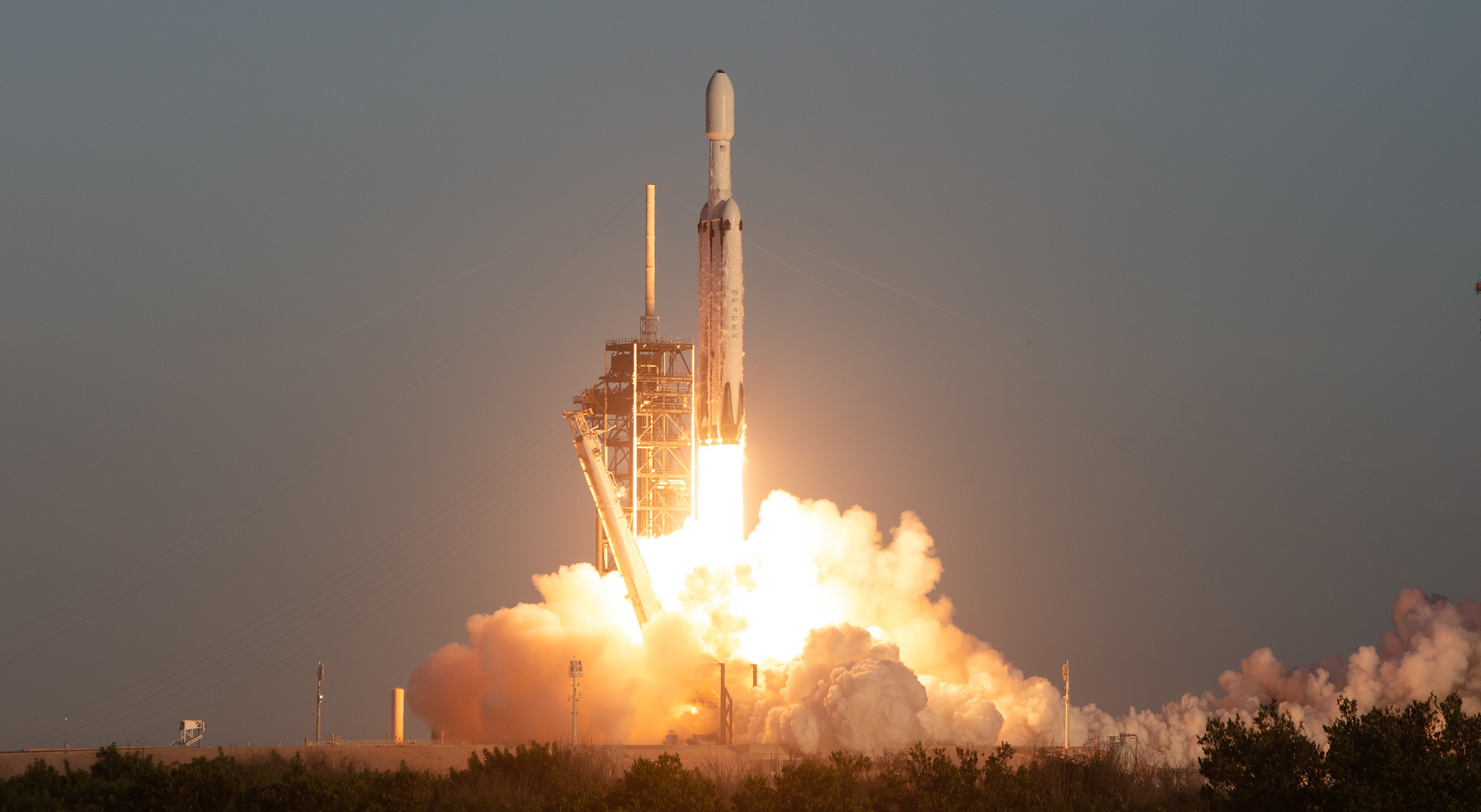
Today, August 30, 2026, NASA’s Nancy Grace Roman Space Telescope successfully lifted off from the agency’s Kennedy Space Center in Florida and started the journey to its new home. The SpaceX Falcon Heavy rocket released the Roman telescope about 30 minutes after launch in an optimal trajectory for its 30-day trip to the second Lagrange Point (L2) 1 million miles from Earth, a gravitationally stable location in space relative to the Earth and the Sun.
Matt Mountain, AURA president, said, “Congratulations to the entire Roman Team and NASA for today’s perfect launch! Roman’s infrared surveys and new observations will open exciting avenues of astronomical exploration into the nature of dark energy and dark matter and provide new insights into the evolution of extra-solar planetary systems. Go Roman!”
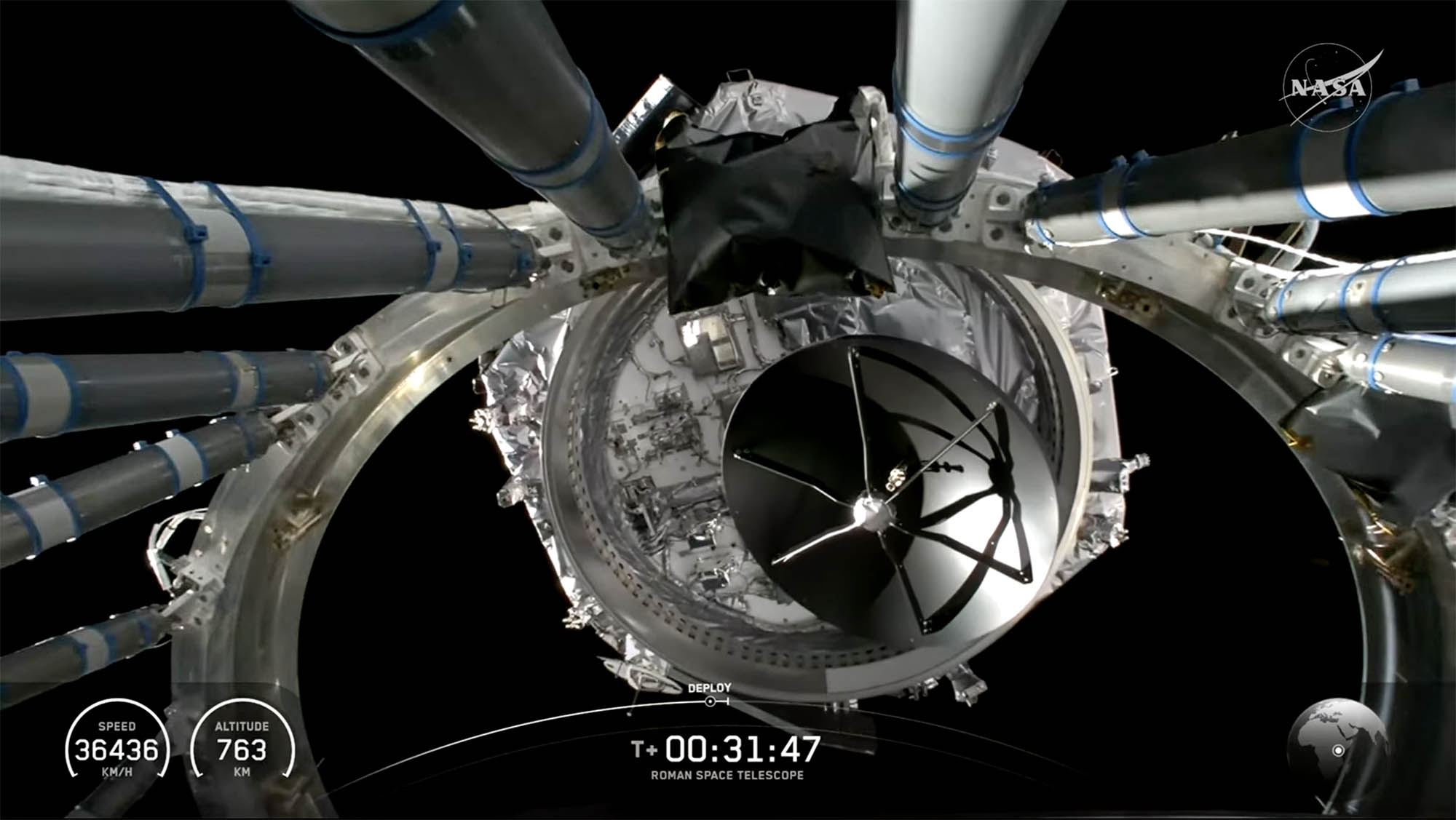
Named after Dr. Nancy Grace Roman, NASA’s first chief astronomer and one of the architects of NASA’s modern science program, the Roman Space Telescope will collect surveys of the cosmos in unprecedented detail building on the science discoveries and technological leaps of NASA’s Hubble and James Webb Space Telescopes. It will map large areas of the universe very quickly: if Hubble and Webb are zoom lenses, Roman is a panoramic camera. Roman’s First Look Observations will be released shortly after its 90-day commissioning period, on a date to be set by NASA.
Managed by AURA, the Space Telescope Science Institute (STScI), based in Baltimore, Maryland, is the home of Roman’s Science Operations Center and serves as the space science community’s interface to the telescope and its data. STScI will plan and schedule observations throughout Roman’s five-year mission and process, archive and disseminate its data to the scientific community. STScI is also the Science Operations Center for Hubble and Webb, the Mission Operations Center for Webb, and the home of the Mikulski Archive for Space Telescopes (MAST), which hosts and delivers data for more than two dozen space missions, including Roman.
“STScI has been working towards this day and is ready to take on the challenges of the immense amount of data Roman will produce,” said Jen Lotz, STScI Director. “We are excited to support the astronomical community and enable new discoveries from Roman, NASA’s next great space telescope.”
AURA sends its congratulations to the people whose hard work culminated in Roman’s successful launch, ahead of schedule and under budget. We will be watching closely as Roman gets ready to send its first images and start its surveys. Stay tuned for an exciting voyage!