
NSF-DOE Vera C. Rubin Observatory Construction
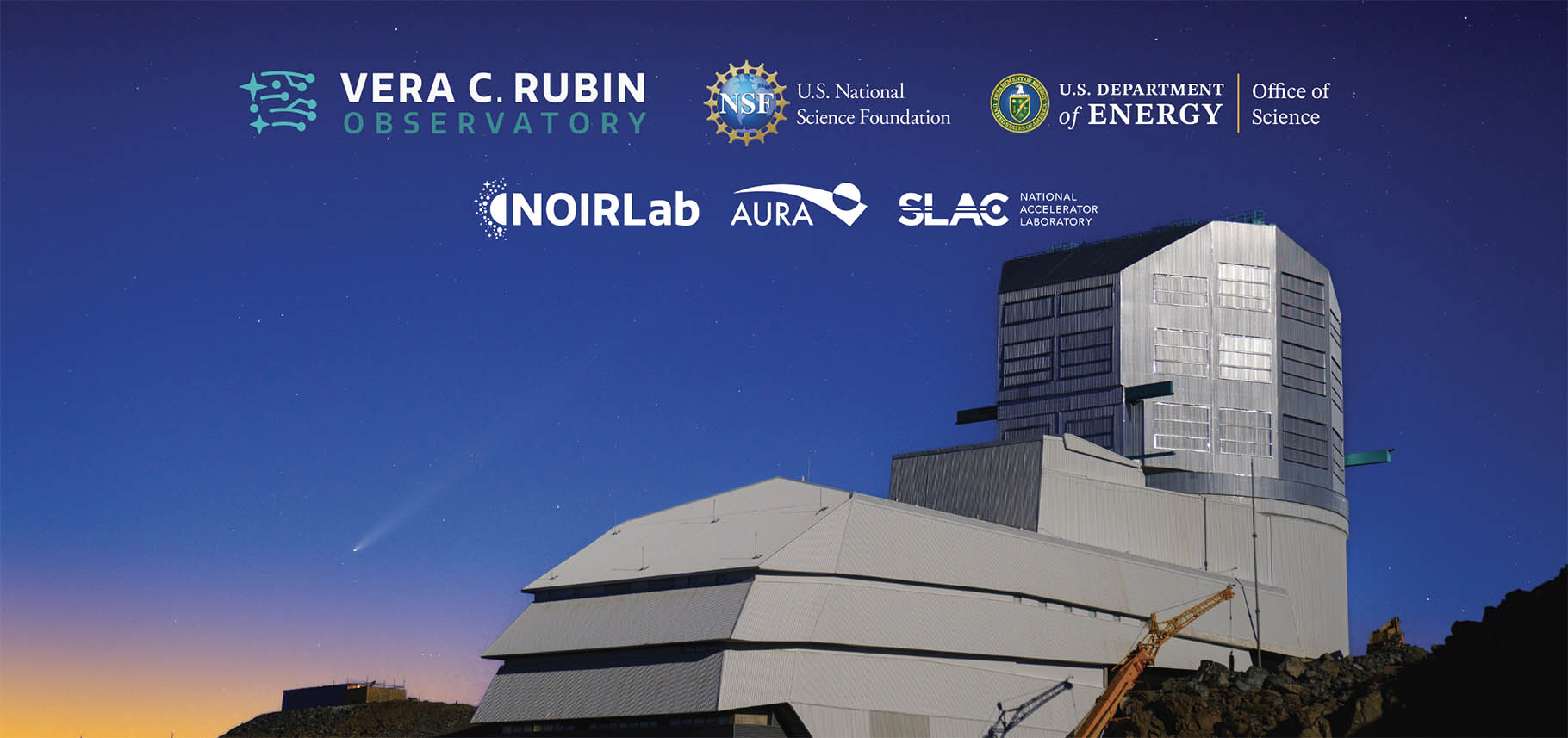
NSF-DOE Vera C. Rubin Observatory, currently under construction by AURA on Cerro Pachón in Chile, is an 8-meter-class telescope coupled to a 3200 megapixels camera – the world’s largest digital camera ever fabricated for optical astronomy. Rubin Observatory will bring the sky to life and revolutionize the way we explore the cosmos.
The U.S. National Science Foundation (NSF) and the U.S. Department of Energy (DOE) Office of Science Vera C. Rubin Observatory will advance science in four main areas: the nature of dark matter and understanding dark energy, cataloging the Solar System, exploring the changing sky, and Milky Way structure and formation.
The observatory will operate on an automated cadence, capturing an area the size of 40 full moons with each 30-second exposure and returning to the same area of sky approximately every three nights. Over ten years of operations, hundreds of deep exposures will be acquired for every part of the visible sky. Dedicated computer facilities will process Rubin Observatory data in real time, issuing worldwide alerts within 60 seconds of detected changes in the sky.
A subset of data will be widely available through the Rubin Observatory Education and Public Outreach dynamic website portal, offering tools and activities for formal educators, citizen scientists, informal science centers, and the general public to engage, explore, and discover.
NSF and DOE will support Rubin Observatory in its operations phase to carry out the 10-year Legacy Survey of Space and Time. They will also provide support for scientific research with the data.
During operations, NSF funding is managed by AURA under a cooperative agreement with NSF, and DOE funding is managed by SLAC National Accelerator Laboratory (SLAC), under contract by DOE. Rubin Observatory will be operated by NSF NOIRLab and SLAC.
Ever-changing Universe Revealed in First Imagery From NSF–DOE Vera C. Rubin Observatory
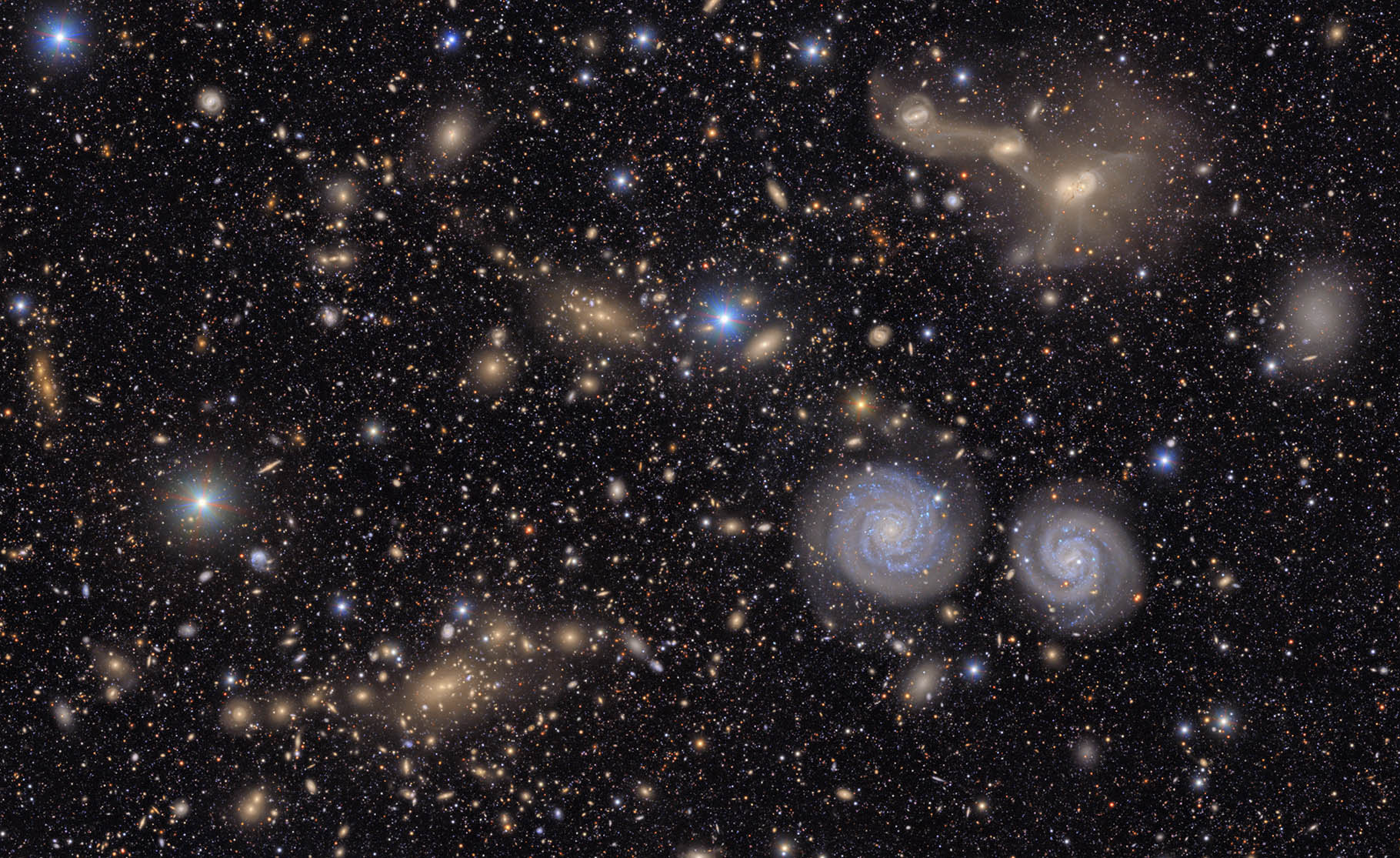
From distant stars and galaxies to asteroids whizzing through the solar system, the NSF-DOE Vera C. Rubin Observatory unveiled its first imagery on June 23, 2025 and brought the night sky to life like never before
The imagery shows cosmic phenomena captured at an unprecedented scale. In just over 10 hours of test observations, Rubin Observatory has already captured millions of galaxies and Milky Way stars and thousands of asteroids. The imagery is a small preview of Rubin Observatory’s upcoming 10-year scientific mission to explore and understand some of the universe’s biggest mysteries.
The culmination of more than two decades of work, Rubin Observatory is perched at the summit of Cerro Pachón in Chile, where dry air and dark skies provide one of the world’s best observing locations. Later in 2026, Rubin will begin its primary mission, the Legacy Survey of Space and Time, in which it will scan the sky nightly for 10 years to precisely capture every visible change.
The result will be an ultrawide, ultra-high-definition time-lapse record of the universe. It will bring the sky to life with a treasure trove of billions of scientific discoveries. The images will reveal asteroids and comets, pulsating stars, supernova explosions, far-off galaxies and perhaps cosmic phenomena that no one has seen before.
AURA managed the construction of the NSF-DOE Vera C. Rubin Observatory.