
About AURA
The Association of Universities for Research in Astronomy (AURA) was founded in 1957 to establish, nurture, and promote public, state-of-the-art observatories and facilities that advance astronomical research.
AURA Today
AURA, headquartered in Washington D.C., manages world-class astronomical Centers for both the U.S. National Science Foundation (NSF) and the National Aeronautics and Space Administration (NASA). Our Centers enable the next decade of astronomical discoveries through world-class facilities and science.
Building on our origin in broadening access and opportunities for all astronomers, AURA is committed to providing the astronomical community with open access to the world-class facilities it manages. Telescope time is allocated based on merit in a dual anonymous selection process. Our data archives open observational data to anyone, and support thousands of science papers each year.
AURA is also committed to sharing the wonders of the Universe with the public through outreach, educational events, and press releases. AURA’s talented communication, education, and outreach teams reach millions of people with the excitement of astronomical discoveries and inspiring images of our Universe.
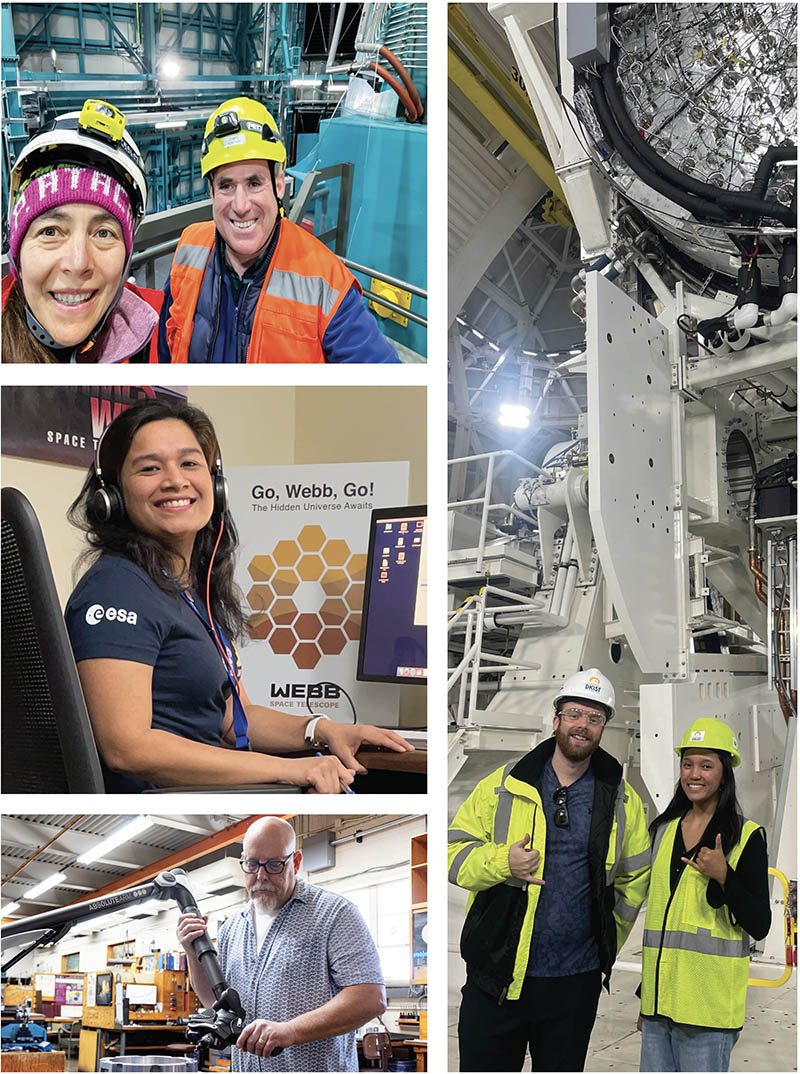
To achieve its mission, AURA employs approximately 1700 highly skilled professionals at its three Centers, construction projects, and corporate headquarters. Our staff work at multiple locations in the continental United States, Hawai‘i, and Chile, and build, operate, and support state-of-the-art facilities, data centers, and science platforms. Our workforce spans time zones and international locations, professional disciplines, education levels, and an enormous breadth of perspectives, capabilities, and contributions.
Future of Astronomy
Looking to the future, AURA fully supports the scientific vision of Pathways to Discovery in Astronomy and Astrophysics for the 2020s and joins with our community to advocate for its recommendations and highest prioritized scientific goals: “Pathways to Habitable Worlds, New Windows on the Dynamic Universe, and Unveiling the Drivers of Galaxy Growth.” As the operational home for observatories spread across the globe and in space, we stand ready to build on our experience and assist our community to implement the Pathways to Discovery recommendations for both ground- and space-based astronomy.
AURA works with community members to continue and enhance our programs in alignment with Decadal recommendations, promote sustainable practices, and coordinate with our partners in the preservation of dark and quiet skies. Through NSF NOIRLab, we will continue a leading role in assessing impacts of satellite constellations on astronomy.
AURA also fully supports the Decadal Survey for Solar and Space Physics (Heliophysics) 2024-2033 which presents a prioritized strategy of basic and applied research to advance scientific understanding of the Sun, Sun-Earth connections and the origins of space weather, the Sun’s interactions with other bodies in the solar system, the interplanetary medium, and the interstellar medium. Besides excitement for the NSF Daniel K. Inouye Solar Telescope’s ongoing, and anticipated, contributions to the field, one of its NSF NSO-related recommendation for the next decade is the development of the next-generation Global Oscillation Network Group (ngGONG).
Since 1957 AURA has enabled discovery with world-class astronomical observatories and data, unified astrophysics communities, and promoted public engagement and understanding of our Universe. Today, AURA continues to advance this legacy, driving scientific progress while broadening access to the wonders of the cosmos.
For NSF, AURA operates NSF NOIRLab, located in Tucson, Arizona, La Serena, Chile and Hilo, Hawai‘i, and the NSF National Solar Observatory (NSO) located in Boulder Colorado and Maui, Hawai‘i. AURA also manages the NSF-DOE Vera C. Rubin Observatory construction project in Chile. For NASA, AURA operates the Space Telescope Science Institute (STScI) in Baltimore, Maryland.