
2026 AURA Annual Meeting
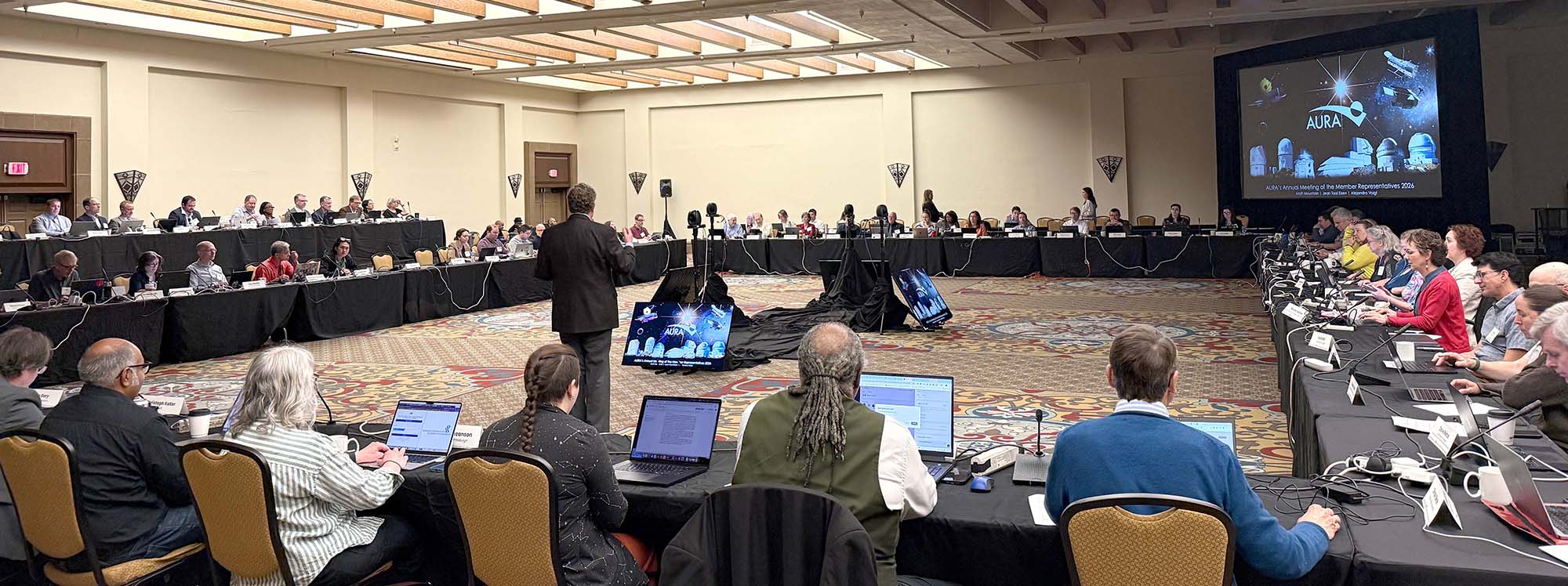
Astronomers Convene
In late April astronomers from across the U.S. and Chile gathered in Tucson, Arizona for the 2026 AURA Annual Meeting. Held each Spring, the meeting brings together representatives from AURA’s 51 member institutions to elect governance positions, discuss astronomy topics, attend open houses, network with colleagues, interact with AURA leadership, and share science results.
The 2-day meeting started off with a presentation by the President of AURA, Matt Mountain. He highlighted recent science results from AURA facilities including discrepancies in the measurement of the expansion rate of the Universe, the search for atmospheres on rocky worlds, and new insights into magnetic fields on the Sun.
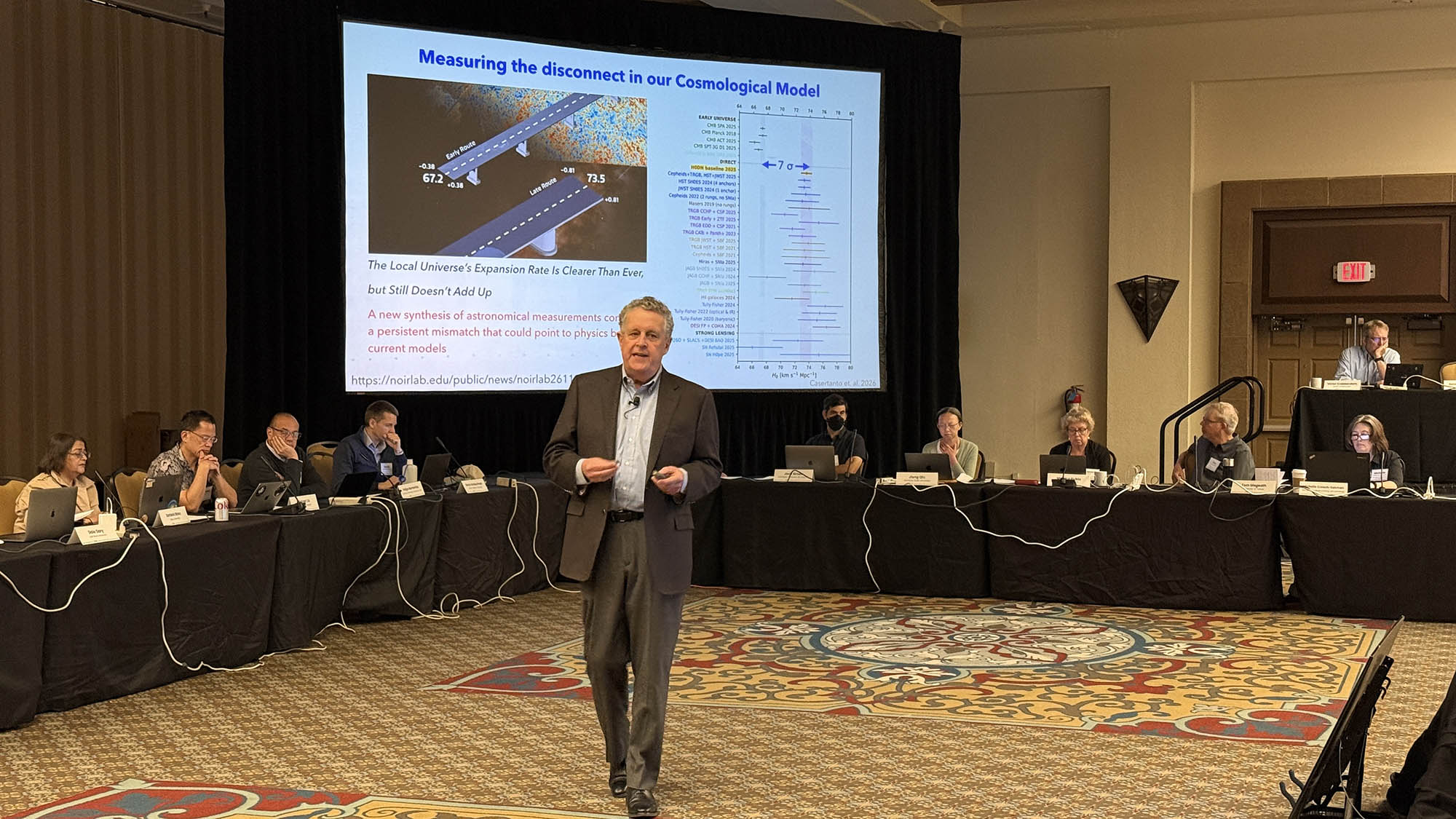
Jean Toal Eisen, AURA Executive Vice President, then spoke about the U.S. budget landscape and Alejandra Voigt, AURA Head of Mission in Chile, updated the attendees about AURA facilities in Chile and efforts to protect Chile’s dark skies. The AURA Center Directors: Jen Lotz, Space Telescope Science Institute (STScI); Pat McCarthy, NSF National Optical-Infrared Astronomy Research Laboratory (NOIRLab); and Christoph Keller, NSF National Solar Observatory (NSO) provided updates about their Center’s facilities and plans.
Elections for new members of AURA’s Board and governance councils are an important part of every AURA Annual Meeting. Candidates for open governance positions on the AURA Board of Directors, the Space Telescope Institute Council, the NOIRLab Management Oversight Council, the Solar Observatory Council, and the Nominating Committee were presented by Nicolle Zellner of the 2025 Nominating Committee. Elections were held on the second day of the meeting with the Member Representatives casting their ballots using a ranked voting system.
AURA Future Leaders
Along with the Member Representatives, attendees (both in person and online) included the AURA Board of Directors, Center Directors and Deputies, AURA leadership and staff and the AURA Future Leaders. The Future Leaders are chosen each year from a pool of applicants that include post-docs from AURA’s member institutions and postdocs from the NASA, NSF, and Eddy post-doctoral programs.
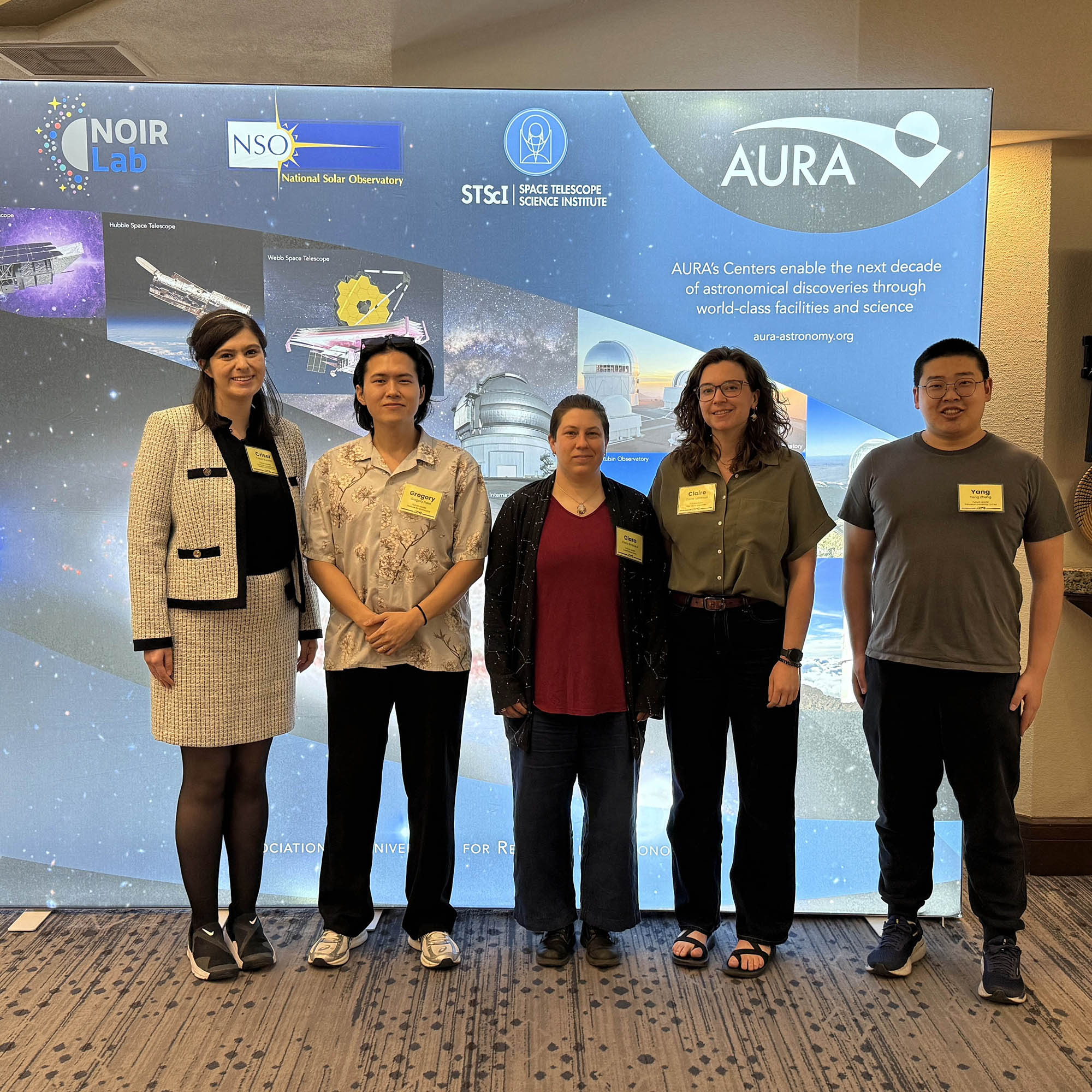
Crisel Suarez, Future Leader from Vanderbilt University, commented, “I really enjoyed participating at the AURA Annual Meeting as a Future Leader. I had opportunities to interact with the different Center Directors, AURA Board members, Member Representatives, and fellow Future Leaders. It was a very enriching experience being able to have direct insight into different leadership perspectives and ask questions from a wide range of viewpoints about the future of astronomy.”
“This meeting helped me understand the full picture of how large facilities and priorities are managed in astronomy,” Claire Lamman, Future Leader from Ohio State University, said. “It was a unique opportunity to connect with faculty beyond my subfield and learn more about service-based career paths.”
Gregory Paek, Future Leader from University of Hawaiʻi, added, “Engaging with people from such diverse fields, roles, and career stages was a true highlight. It allowed me to visualize a future as a “happy astronomer” (or a related professional) in a way I hadn’t quite considered during my student years. As I navigate the early stages of my career, the possibilities I saw here will serve as a vital roadmap.”
Open Houses
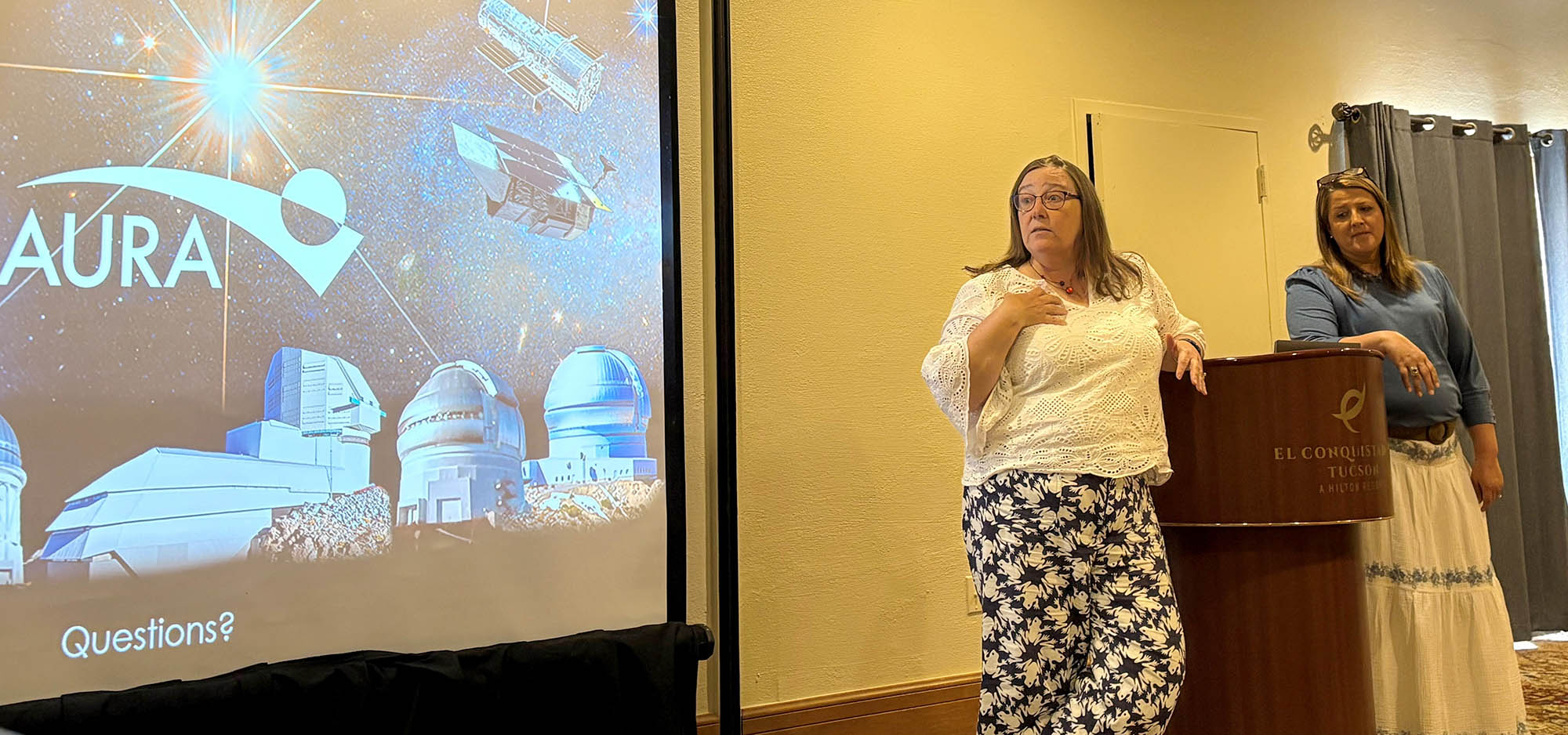
In the afternoon of both days, open houses hosted by each of the Centers and AURA leadership, were held. In their open houses, both NOIRLab and STScI shared information about how users will access data from two new survey telescopes: the NSF-DOE Vera C. Rubin Observatory operated by NSF NOIRLab and located in Chile, and the NASA Nancy Grace Roman Space Telescope, set to launch this fall, with science operations by STScI. At the NSF NSO open house attendees learned about plans for the Next Generation GONG project now in the design phase of development.
At the AURA open house AURA Executive VP Jean Toal Eisen explained how funding is approved in Washington DC and AURA Head of Mission in Chile, Alejandra Voigt, discussed opportunities and challenges for astronomy in Chile.
“This is my first time attending in person, I attended remotely previously as an alternate representative,” said Sean Johnson, Member Representative from the University of Michigan. “I especially liked the STScI and NOIRLab open houses, which I couldn’t attend online, and hearing about the upcoming Rubin and Roman observations.”
Science Showcase
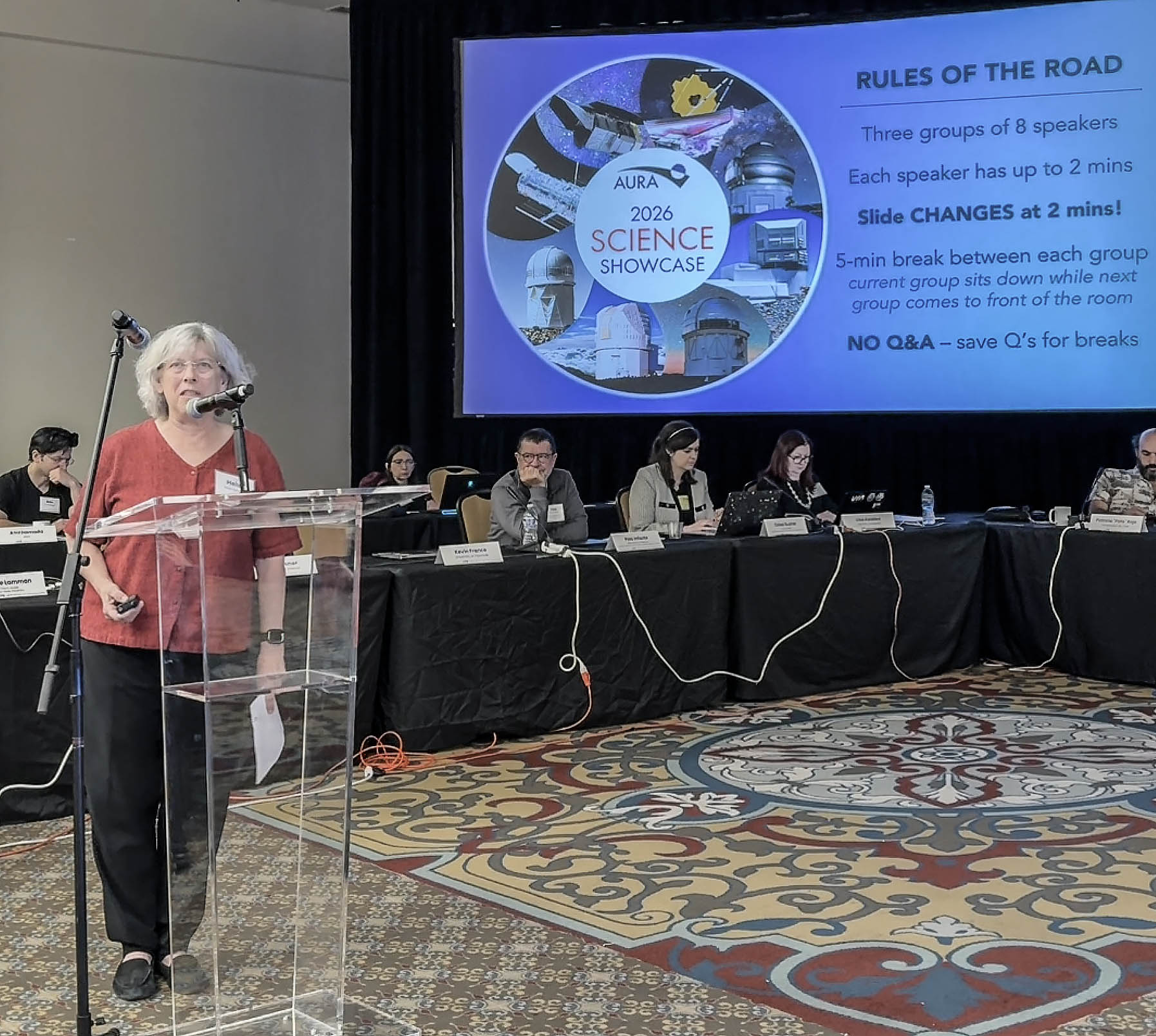
On the morning of the second day AURA featured a new addition to the meeting, held for the first time this year, the AURA Science Showcase. This new event, organized by Heidi Hammel, AURA VP of Science, consisted of two-minute presentations on research enabled by AURA facilities. Twenty-two Member Representatives presented about the Sun, galaxies, exoplanets, star formation, cosmology, and more. The Science Showcase proved to be very popular and will be repeated next year.
“By far the highlight of my meeting was the AURA Science Showcase. It was the first time it was held, and I learned about the broad diversity of science undertaken by all of AURA’s facilities, from solar observatories to optical and infrared observatories, and everything in between,” said Catherine Zucker, Member Representative from Smithsonian Astrophysical Observatory. “I’m hoping this continues in future years and I’m excited to see what science AURA will enable.”
Watch the AURA Science Showcase presentations here.
Networking and Discussion
The meeting agenda also allowed ample time for networking and discussions. “This is one of the best meetings to network in astronomy ever,” commented Steven Kawaler, Member Representative from Iowa State University. “It’s a chance to meet with the Directors of observatories and find out things that you can take to your home institution about the future of these facilities.”
Every year the Representatives are given a discussion topic relevant to astronomy in advance so they can poll their colleagues at their institution and provide feedback to the group. This year’s discussion topic was aimed at exploring how AI could affect astronomical research activities, especially for facilities managed by AURA and users of those facilities. The topic generated lively discussion and areas of commonality and divergence between institutions. Many said that AI is useful for code development and other labor-intensive activities.
One Representative commented:
“Overall, AI has allowed our scientists to save time with straightforward but time-consuming tasks where one can judge the accuracy of the results, leaving more time to come up with new science ideas and prompt AI to see if the data support these ideas. Because of the speed with which AI can produce results, our researchers can ask more follow up questions and also ask “bigger” questions that would take too much time for a human to delve into.”
However, another Representative added:
“I don’t use it. The environmental and sociological effects are generally not worth the appearance of saving a few minutes of time here or there, especially since it all has to be carefully checked anyway (and might end up requiring MORE time). I believe AI/ML use should be narrow and targeted to specific usage cases where it is the appropriate tool.”
Meeting Concludes
The two days of the AURA Annual Meeting were jam packed with elections, activities, networking and presentations. The Member Representatives left with new information about AURA facilities and ideas about astronomical research to bring back to their institutions’ astronomy departments.
Tom Megeath, Representative from the University of Toronto, summed it up, “The meeting is at a really important time because of so many challenges at the moment. I think what is interesting is all the amazing facilities that are coming out, the challenges from AI, and also the challenges of funding. I think it’s so important that everyone gets together at a moment like this and makes some connections.”
For AURA, the Annual Meeting provides an important opportunity each year for its leadership to connect with the researchers using its facilities and the educators teaching the next generation of astronomers. AURA thanks all the attendees and staff that made this year’s meeting a huge success.
AURA Governance 2026-2027
Terms begin July 1, 2026
*Newly elected or re-elected members
AURA Board of Directors
Karen Bjorkman, Chair*
George Blumenthal
Kelle Cruz, Chair of NMOC
Roger Davies
Megan Donahue
Brenna Flaugher, Chair of AMCR
Dale Gary, Chair of SOC*
Puragra (Raja) GuhaThakurta
Timothy Heckman
Leopoldo Infante
James McAteer
Matt Mountain, Ex Officio
Kathie Olsen
Jim Oschmann*
David Reitze
Monica Rubio
Michael Wise, Chair of STIC*
AURA Management Council for the Rubin Observatory (AMCR)
Tulika Bose
Brenna Flaugher, Chair*
Matthew Graham
Ezequiel Treister, ex-officio
Allison Lung
Larry Gladney
Rachel Mandelbaum
Stuartt Corder, ex-officio
Joe McMullin
Matt Mountain, ex-officio
Vivian O’Dell
Connie Rockosi
Michael Wood-Vasey, Vice-Chair
2026- 2027 Nominating Committee
Adam Burgasser*
Kelsey Johnson*
Pat Knezek*
Paul Martini*
Mayra Montrose*
Emily Petroff*
Kathy Reeves*
NOIRLab Management Oversight Council (NMOC)
Kathleen Amm*
JoAnn Browning
Kelle Cruz, Chair*
Sean Dougherty*
David Hogg*
Rebecca (Becks) Benedick Kier
Sarah Lipscy, Vice-Chair
Joe McMullin*
Matt Mountain, ex-officio
Elizabeth Sexton-Kennedy
David Shoemaker
Ezequiel Treister
Space Telescope Institute Council (STIC)
Stuart Bale
James Bullock
Peter Capak*
Paul Hertz*
Joan Higginbotham
David Mongeau
Matt Mountain, ex-officio
Alison Nordt
Willie Rockward
Ed Schlesinger*
Jessica Werk
Michael Wise, Chair*
Solar Observatory Council (SOC)
Dan Baker*
Sarbani Basu
Doug Biesecker
Geoff Crowley
Tammy Dickinson*
Dale Gary, Chair*
S. Craig Jackson, Jr.
James Mason, Vice-Chair
Sarah Matthews*
Matt Mountain, ex-officio
Saku Tsuneta
Alan Tokunaga