
DESI Completes Planned 3D Map of the Universe and Continues Exploring
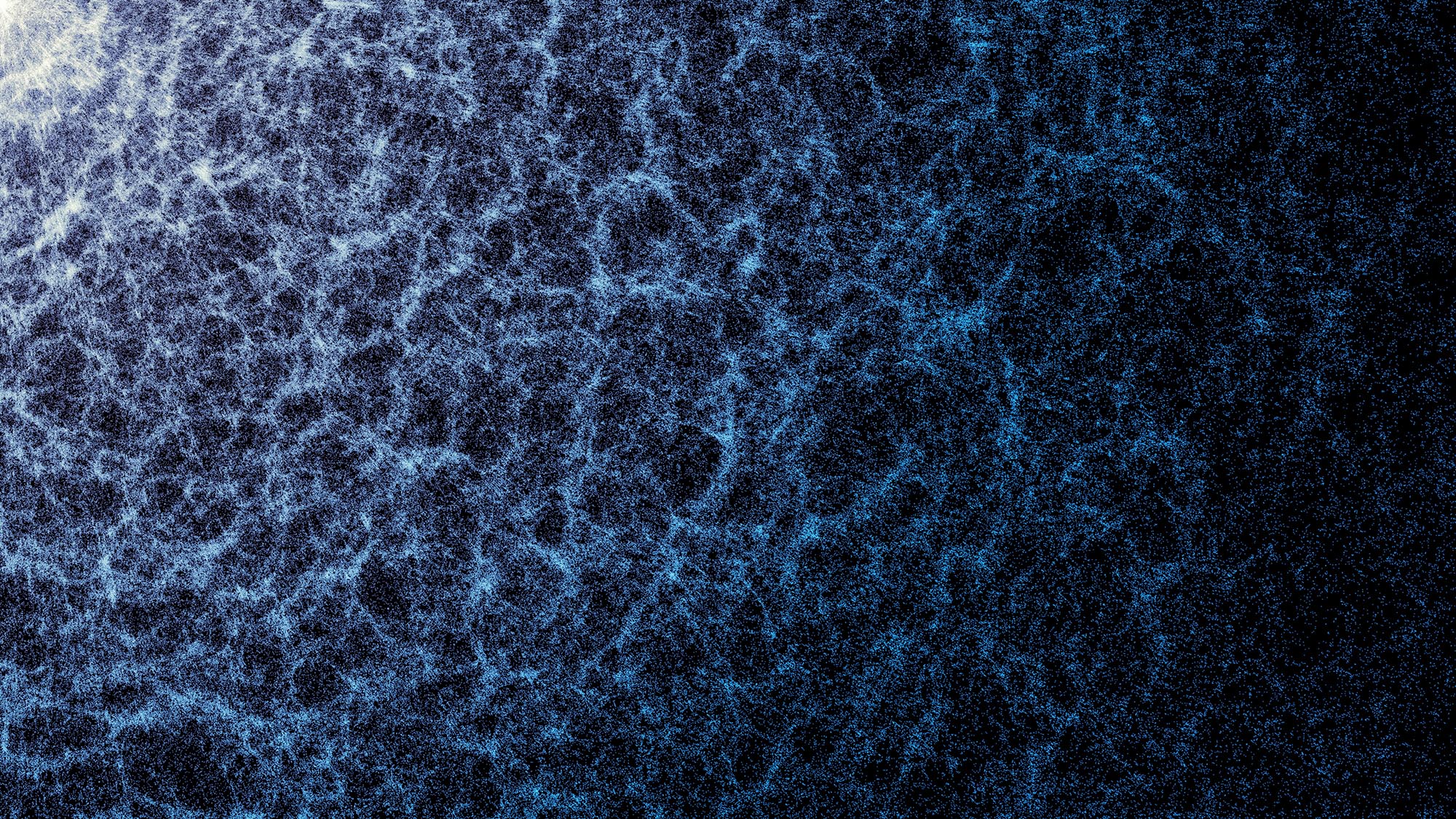
The Dark Energy Spectroscopic Instrument, one of the most extensive surveys of the cosmos ever conducted, finished all observations for its originally planned 3D map of the Universe
DESI has mapped more than 47 million galaxies and quasars, creating the largest high-resolution 3D map of our Universe to date. Because of the instrument’s excellent performance and hints that dark energy might evolve, DESI will continue observations into 2028 and further expand the map. DESI was constructed with funding from the U.S. Department of Energy Office of Science and is mounted on the U.S. National Science Foundation Nicholas U. Mayall 4-meter telescope.
Last night, the 5000 fiber-optic eyes of the Dark Energy Spectroscopic Instrument (DESI) swiveled onto a patch of sky near the Little Dipper. Roughly every 20 minutes, they locked onto distant pinpricks of light, gathering photons that had traveled toward Earth for billions of years. When the Sun rose, DESI collaborators marked the completion of a major milestone: successfully surveying all of the area in DESI’s planned map of the Universe.
The five-year survey, finished ahead of schedule and with vastly more data than expected, has produced the largest high-resolution 3D map of the Universe ever made. Researchers use that map to explore dark energy, the fundamental ingredient that makes up about 70% of our Universe and is driving its accelerating expansion.
DESI’s quest to understand dark energy is a global endeavor. The international experiment brings together the expertise of more than 900 researchers (including 300 PhD students) from over 70 institutions. The project is managed by the U.S. Department of Energy’s Lawrence Berkeley National Laboratory (Berkeley Lab), and the instrument was constructed and is operated with funding from the DOE Office of Science. DESI is mounted on the U.S. National Science Foundation Nicholas U. Mayall 4-meter Telescope at NSF Kitt Peak National Observatory (KPNO) in Arizona, a Program of NSF NOIRLab.
By comparing how galaxies clustered in the past with their distribution today, researchers can trace dark energy’s influence over 11 billion years of cosmic history. Surprising results using DESI’s first three years of data hinted that dark energy, once thought to be a “cosmological constant,” might be evolving over time. With the full set of five years of data, researchers will have significantly more information to test whether that hint disappears or grows. If confirmed, it would mark a major shift in how we think about our Universe and its potential fate, which hinges on the balance between matter and dark energy.
“It’s impossible to capture everything that went into making DESI such a successful experiment. From instrument builders and software engineers to technicians, observatory staff, and scientists — including many early-career researchers — it truly took a village,” says Stephanie Juneau, associate astronomer and NSF NOIRLab representative for DESI. “Ultimately, we are doing this for all humanity, to better understand our Universe and its eventual fate. After finding hints that dark energy might deviate from a constant, potentially altering that fate, this moment feels like sitting on the edge of my seat as we analyze the new map to see whether those hints will be confirmed. I’m also very intrigued by the many other discoveries that await in this new dataset.”