
30 Years of GONG: The Enduring Legacy of the U.S. National Science Foundation National Solar Observatory Solar Monitoring Network
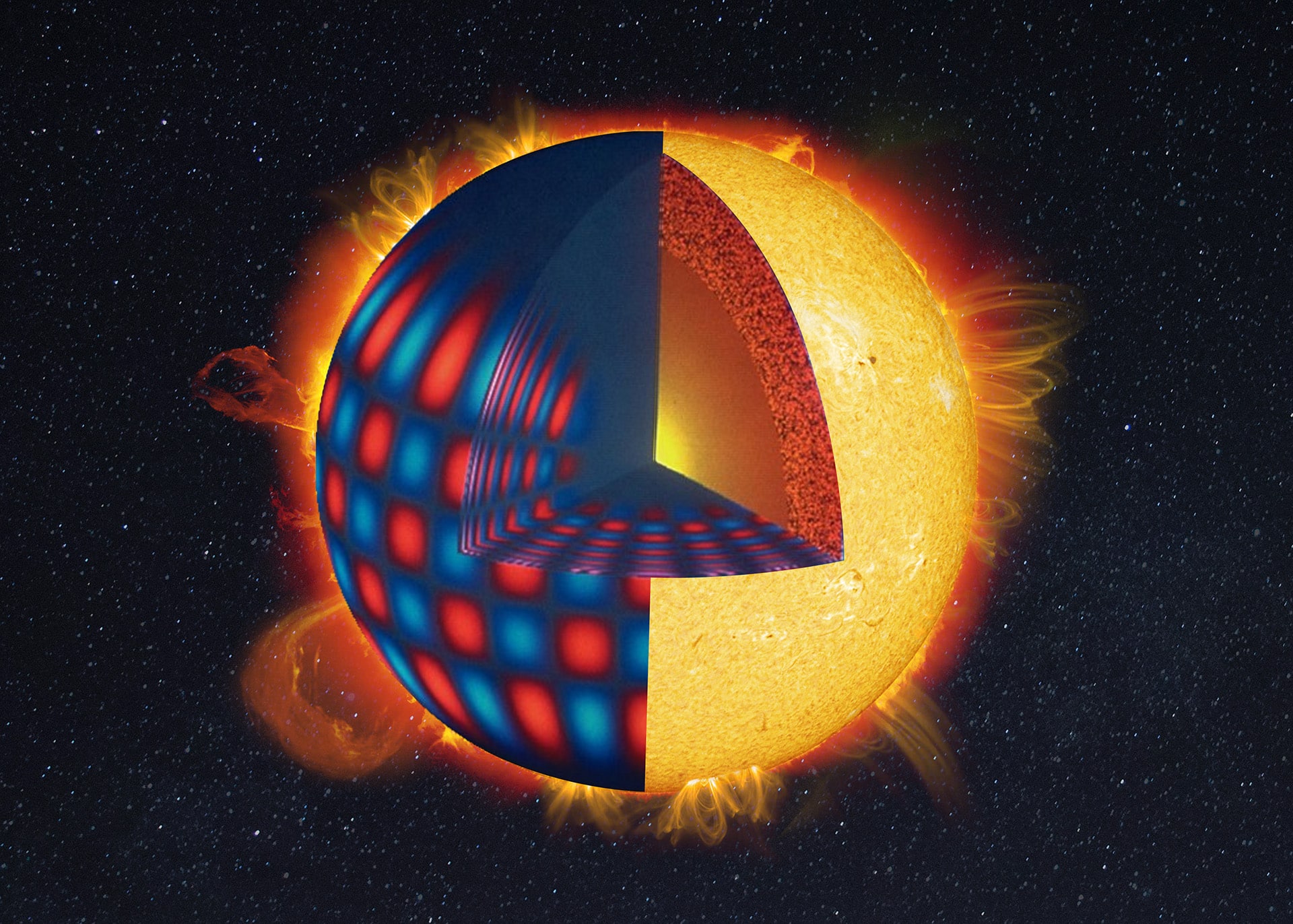
Sometimes the most remarkable scientific achievements aren’t just the ones that dazzle in a moment, but the ones that endure.
When the Global Oscillation Network Group (GONG) began operations in 1995, it was designed to run for just three years. Funded by the U.S. National Science Foundation and operated by the NSF National Solar Observatory (NSF NSO), the goal was focused and finite: build a global network of telescopes capable of measuring vibrations on the Sun’s surface and use them to probe the solar interior, at a time when the field of helioseismology was still coming into its own.
Its capabilities were soon recognized by the U.S. Air Force which began providing support for its activities. In 2015, NSF-NOAA GONG received funding from the U.S. National Oceanic and Atmospheric Administration (NOAA). In recognition of the importance of the NSF-NOAA collaboration, it was rebranded NSF-NOAA GONG and has been jointly supported by NSF and NOAA ever since.
Keeping GONG running far beyond its three-year mission has been like keeping your first car on the road longer than expected. It was affordable to own and operate. Parts wore out, some became unavailable, and repairs were sometimes improvised. This “car” kept running not because it was easy, but because it was traveling a route few others could take. It’s the dependable daily driver on a cross-cosmic road trip through the heart of the Sun.
Today, GONG delivers continuous, near real-time observations of the Sun to researchers and space weather scientists and forecasters. It supports fundamental solar physics, facilitates breakthroughs in research, informs operational space weather models, and provides one of the longest, consistent records of the Sun ever assembled. GONG was built to answer scientific questions, but it also became an anchor in the solar and space weather communities. What began as a short-term experiment is now a vital facility to solar science and to space weather operations. It has come to exemplify the research and operations ecosystem.
Read more on the NSF NSO website (original source).