
Uncovering the Waves That Power the Sun’s Outer Atmosphere
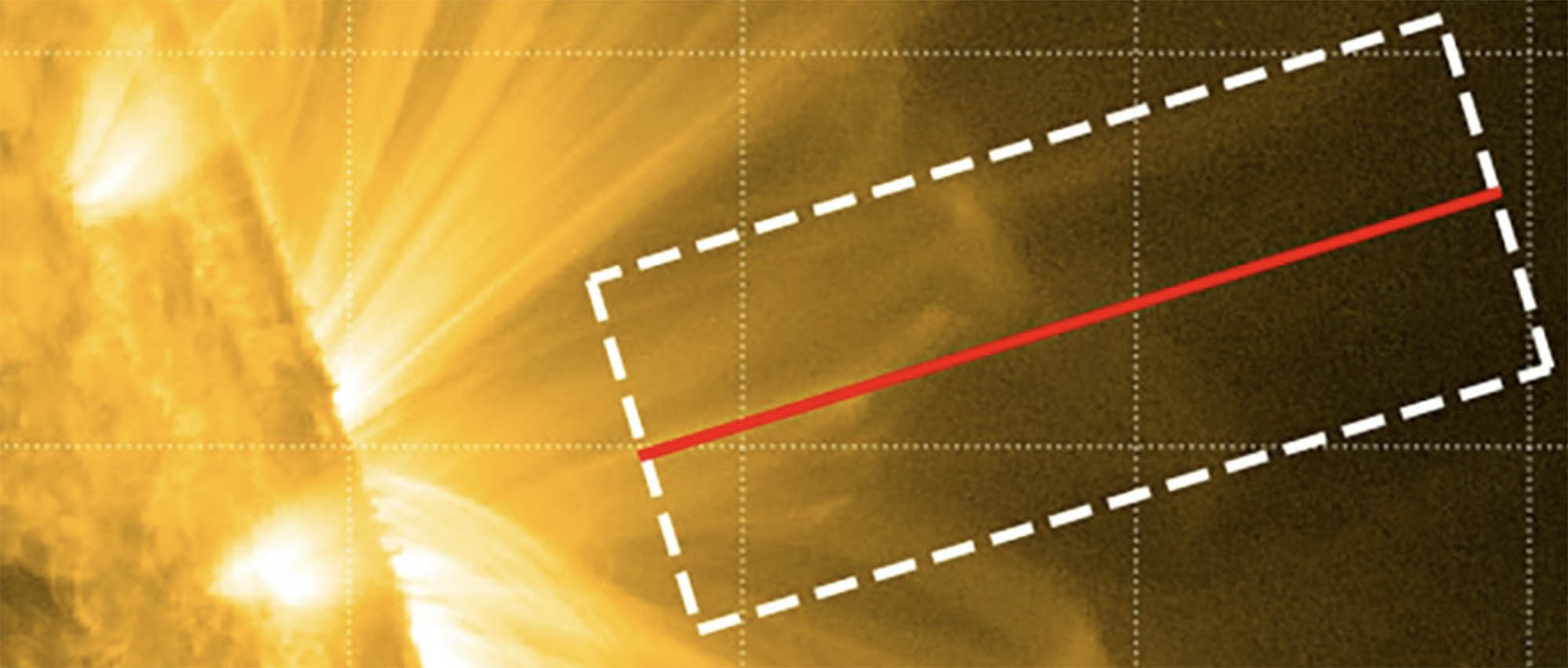
Short Story: High above the Sun’s surface lies the corona, its outer atmosphere only visible to the naked eye from the ground during a total solar eclipse. This ghostly layer, that sizzles at millions of degrees hotter than the Sun’s surface, ripples with waves. For decades, scientists have suspected that these waves may help heat the corona to its particular high temperature, and propel the solar wind—the stream of charged particles that blows outward through the solar system—but catching them in action has been a challenge.
Observations from the U.S. National Science Foundation (NSF) Daniel K. Inouye Solar Telescope—built and managed by the NSF National Solar Observatory (NSF NSO) on Maui, Hawai‘i—are now offering a closer look than ever before. Using its Cryogenic Near Infrared Spectropolarimeter (Cryo-NIRSP) instrument, researchers observed the corona just beyond the Sun’s visible edge in infrared light, focusing on magnetically active regions, which are major drivers of the space weather we experience throughout the heliosphere. The Inouye’s enormous 4-meter mirror—the largest on a solar telescope on Earth—allows scientists to track changes in the corona on timescales of less than a second while resolving fine details across regions thousands of kilometers wide.
The data reveal strong wave activity at surprisingly high frequencies, reaching up to 100 millihertz or 10-second periods. Even more intriguing, the researchers found a clear relationship between how bright the coronal light appears and how broadened its spectral signature becomes—an effect that may be a telltale sign of compressive magnetic waves traveling through the Sun’s atmosphere. Together, these results highlight the power of the Inouye Solar Telescope’s advanced instruments and mark an important step toward understanding how waves help shape and energize the solar corona.
Led by Momchil Molnar from the Southwest Research Institute in Boulder, Colorado, the study includes three NSO scientists, and the paper describing it, titled “Ubiquitous high-frequency waves and disturbances in the active region corona observed with DKIST/Cryo-NIRSP” is now available in the Astrophysical Journal.